

Is Bathtub Refinishing Worth It?

If your tub is stained, dull, or rough to the touch, it’s easy to assume the only “real” solution is replacement. But in most Chicago bathrooms, replacing a bathtub isn’t a simple swap — it often turns into tile damage, plumbing adjustments, days of disruption, and a bill that climbs fast.
Bathtub refinishing is usually worth it when the tub itself is structurally solid (especially cast iron or steel) and the problem is the surface — worn enamel, discoloration, scratches, chips, or rust spots. Done professionally, refinishing can make an old tub look new again without demolition.
Quick answer
Yes — bathtub refinishing is worth it:
-
the tub is solid and stable (no flexing or soft spots),
-
you want a fresh, glossy surface without a full remodel,
-
you want a faster, lower-cost option than replacement.
It may NOT be worth it if:
-
the tub flexes or has soft spots — a support problem a coating won’t fix,
-
there are structural cracks or active leaks,
-
you’re already gutting the bathroom for a full remodel,
-
the metal is badly rusted or failing from underneath.
What refinishing actually does (and what it doesn’t)
A new tub isn’t the expensive part — the work around it is.
Replacing a bathtub commonly involves:
-
removing or damaging tile to get the tub out,
-
plumbing work (drain, overflow, valves),
-
disposal, delivery, and hauling,
-
repairs to walls/floor after removal,
-
multiple trades and multiple days.
If your bathroom is not being remodeled anyway, refinishing is often the smarter move.
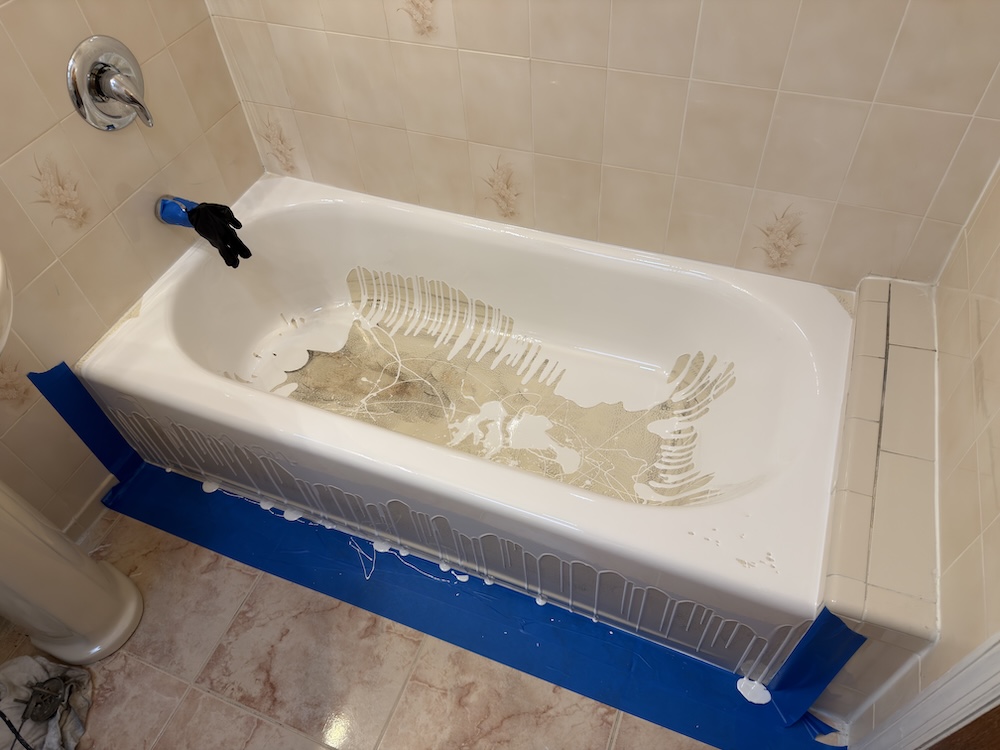
Typical cost in Chicago: refinishing vs replacement
Refinishing
- Usually completed in a single visit
- Ready to use in ~24 hours
- Often a fraction of replacement cost
Replacement
- Usually takes several days
- Higher risk of “surprises” once demolition starts
- Total cost often ends up several thousand dollars depending on tile, plumbing, and labor
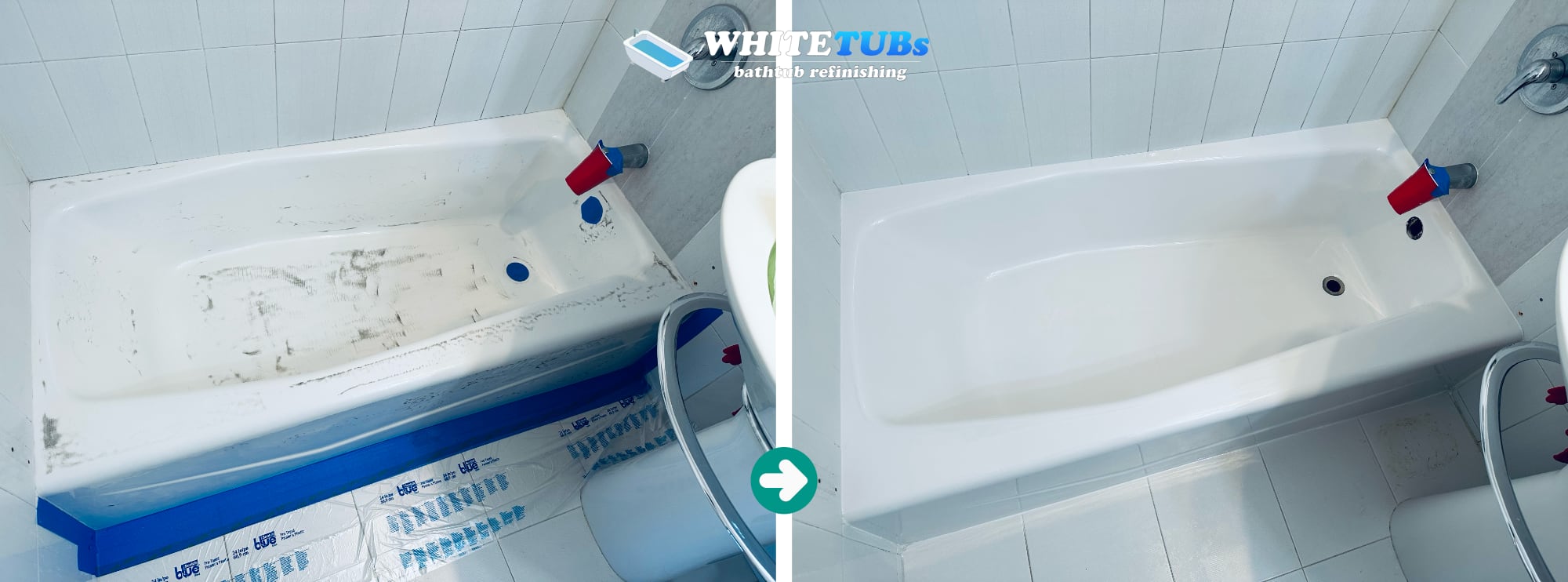
How long does refinishing last?
With professional prep + quality materials + proper care, refinishing can last many years, and in many cases up to 10–15 years. We also back our work with a warranty (details depend on the project type).
Longevity comes down to two things:
-
Preparation (cleaning, sanding, bonding)
-
Material + method (not all “refinishing” is the same)
Why refinishAdvantages of bathtub refinishing
| Bathtub Refinishing | Bathtub Replacement | |
| Demolition | None | Tub removal, tile work, possible drywall |
| Plumbing work | None | Drain/overflow replacement, fittings |
| Project time | 3–4 hours on-site | 2–5+ days |
| Ready to use | ~24 hours | After full remodel completes |
| Bathroom usable during work | Yes (other fixtures) | No |
| Re-refinish later | Yes, in 7–15 years | Depends on new tub |
| Cost | Starts at $435 | $3,000 – $8,000+ |
When bathtub refinishing is NOT worth it
Here are the situations where we’ll usually recommend a different solution:
-
The tub moves or flexes
If the tub floor feels spongy or you hear cracking sounds under load, that’s typically a support/installation issue (common with low-quality acrylic/fiberglass). A new surface won’t fix movement.
-
Structural cracks or active leaks
If water is escaping through the tub body or there are deep cracks that keep spreading, replacement may be the safer option.
-
You’re already doing a full remodel
If tile, layout, plumbing fixtures, and the tub are all being replaced anyway, refinishing may not make sense.
-
Severe corrosion or metal failure
Some steel tubs rust from the underside or develop serious weak spots. If the metal is failing, the surface can’t compensate.
What types of tubs are best for refinishing?
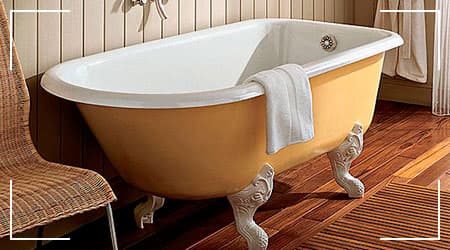
Cast Iron Tubs
Heavy, stable, and built to last. When the surface wears out, refinishing is a great way to keep the tub for years.
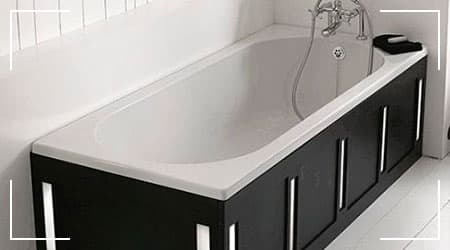
Steel Tubs
Also refinishable when the structure is solid. Rust spots and chips can usually be repaired during prep.
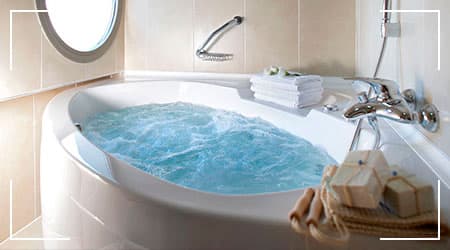
Acrylic / Fiberglass Tubs
Possible in some cases — but only when the tub is stable and properly supported. The biggest enemy is flexing.
What to expect during the process
Most projects follow a simple flow:
-
Protect surrounding areas
-
Remove or mask hardware as needed
-
Prep the surface (clean, decontaminate, sand, bond)
-
Repair chips/scratches if present
-
Apply the new coating using our pour-on method
-
Cure time — typically ready in ~24 hours
We keep the process as low-disruption as possible for occupied apartments.
How to care for a refinished tub (so it lasts)
To protect the finish:
-
Use non-abrasive cleaners (no gritty powders)
-
Lift suction-cup mats between uses — don’t leave them stuck for days
-
Don’t leave bottles/soap sitting in puddles for days
-
Use a soft mat only if it’s approved for refinished surfaces (ask us)
Simple care makes a big difference in lifespan.
Good to knowFrequently asked questions
Is refinishing just “painting the tub”?
No. A professional refinishing job is mostly prep + bonding + correct application. Done right, it’s a true surface restoration — not a quick cosmetic cover-up.
Will the tub look like new?
In most cases, yes — the goal is a smooth, glossy, uniform finish that looks like a new tub.
How soon can I use the tub?
Typically about 24 hours after completion (exact timing depends on conditions and the project).
Can you fix chips and scratches too?
Yes — surface defects like chips, scratches, and small damaged areas can often be repaired as part of the refinishing process.