
Liquid Acrylic for Bathtub Refinishing
What “liquid acrylic” means in bathtub refinishing
Liquid acrylic is a pour-on refinishing material used to restore worn, stained, or damaged tubs without replacement. Some in the industry call it a “liquid ceramic” finish for its hard, glossy, porcelain-like surface after curing. Despite the name, it is not acrylic plastic — it’s a professional two-component polymer coating made specifically for the pour-on method.
What it is
A self-leveling, two-component coating
- A dense polymer base
- A precisely measured hardener
The two are mixed right before application, once the tub is fully prepared. After mixing, the material stays workable for a limited time — the pot life — and must go on within that window.
Thanks to its viscosity and self-leveling properties, it spreads evenly and forms a smooth, uniform layer with no brush or roller texture.
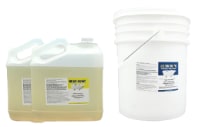
Poured, not sprayed, brushed, or rolled
The coating is poured along the upper edge of the tub and flows down under gravity, covering curves, corners, and contours on its own. More about the pour-on method →
Levels itself
Uniform thickness on the bottom, sides, and rim — no thin spots.
No streaks or tool marks
Nothing touches the wet surface, so nothing leaves a trace.
Seamless, factory-like finish
Glass-smooth, closer to how the tub looked when new.
Brushes or rollers are not recommended with this type of coating — they introduce debris, air bubbles, and surface defects.
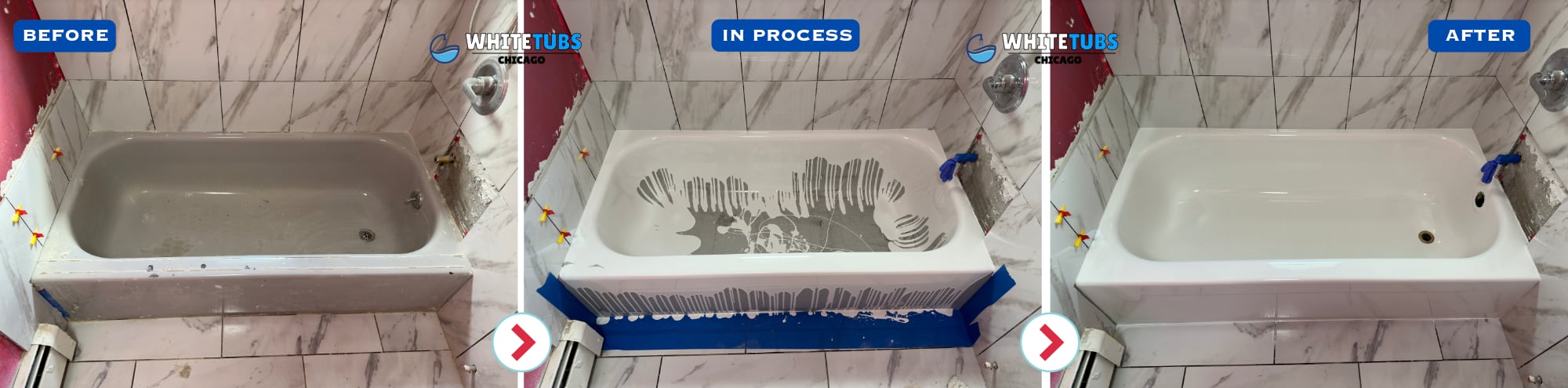
Refinish or replace?
Bathtub refinishing
- No demolition, no plumbing work
- 3–4 hours on site, one visit
- Ready to use in ~24 hours
- Bathroom stays usable during work
- Keeps your existing tile and fixtures
- Can be refinished again in 7–15 years
Bathtub replacement
- Tub removal, tile work, possible drywall
- Drain/overflow replacement, new fittings
- 2–5+ days of work
- Bathroom out of service the whole time
- Building permit and COI if plumbing moves
- Heavy cast iron to cut out and haul away
Where liquid acrylic is used
Porcelain tubs, enamel-coated steel tubs, and cast iron tubs. It restores:
- Worn or dull surfaces
- Discoloration and stains
- Etched or rough enamel
- Previous failed coatings
What it is not used for
Despite the name, liquid acrylic coating is not the fix for acrylic bathtubs. Cracks and chips in an acrylic or fiberglass tub need structural patching, reinforcement, and polishing — a separate process.
Why liquid acrylic refinishing works
Durable finish
A dense, impact-resistant layer that resists cracking, peeling, and wear.
Smooth, non-porous surface
Dirt, stains, and bacteria have nowhere to settle.
Low odor
Modern formulas have minimal odor compared to spray coatings — fine for occupied homes.
Fast turnaround
Most tubs are ready for use in about 24 hours.
Cost-effective
No demolition, no plumbing changes, no tile damage.
Long service life
With proper care the finish lasts 7–15 years.
Refinish vs replace
Liquid acrylic vs bathtub replacement
- No demolition required
- Walls and tile stay untouched
- One visit, typically 3–4 hours
- A fraction of the cost of replacement
- Keeps the original cast iron or porcelain tub in place
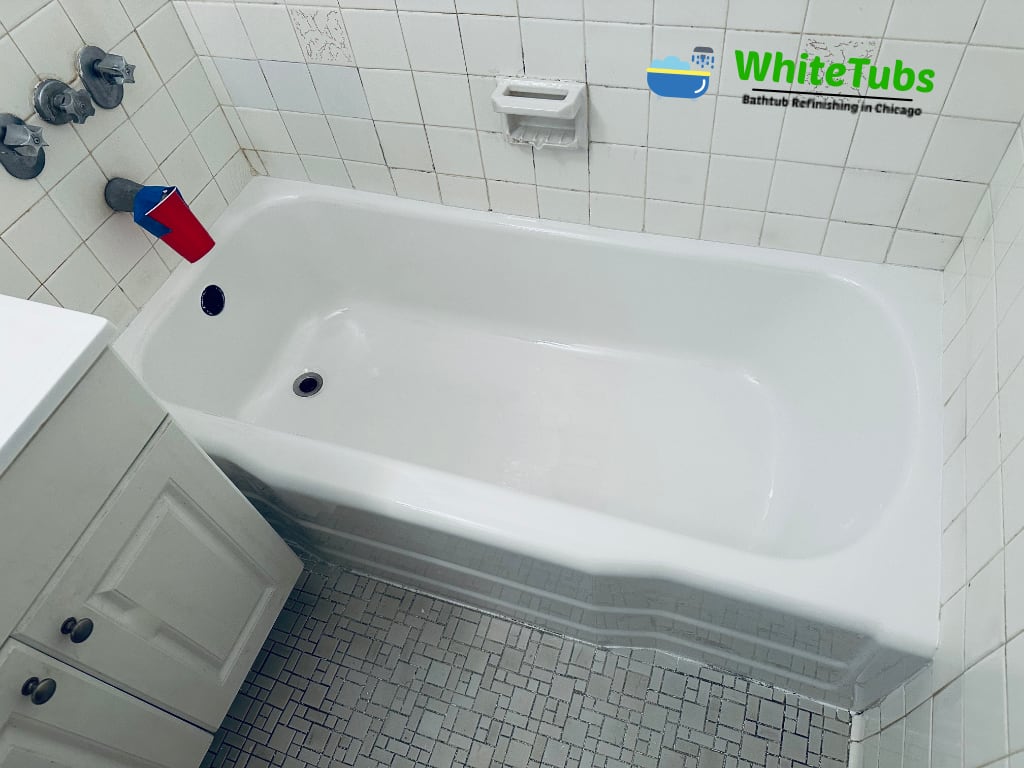
A smart alternative to replacing your bathtub. Liquid acrylic refinishing restores the look and function of the tub without the cost and disruption of replacement. For a clean, durable, professional result, the pour-on method remains one of the most effective options available.
Ready to refinish your tub?
Send a photo — we’ll reply with a price and open dates.
Frequently asked questions
Is liquid acrylic the same as ceramic coating?
Not exactly. “Liquid ceramic” is a descriptive term used to highlight the hardness and porcelain-like appearance of the cured surface. Technically, the material is a specialized polymer coating.
Is this an epoxy or paint?
No. Liquid acrylic coatings are not household paint and are not applied with brushes or rollers. They are professional refinishing materials designed for pour-on application.
Is the surface slippery?
The finish is smooth but not excessively slippery. Optional anti-slip solutions can be added if needed.
How do I care for a refinished bathtub?
Use non-abrasive cleaners and avoid harsh chemicals to maintain the finish and extend its lifespan.