
Bathtub Spray-On Refinishing (Spraying) in Chicago: How It Works, Pros & Cons
The quick fix — and what it costs you later
A dull, stained, or scratched tub makes a “spray-on” job tempting. It looks good at first, but comes with trade-offs: strong odor, longer downtime, and a finish that often doesn’t hold up to daily use. Here’s what spray-on actually is, when it makes sense, where it fails, and what to choose for a longer-lasting result in a Chicago bathroom.
Need a quick recommendation? Send a photo of your tub — we’ll tell you straight whether spraying is worth it or another method makes more sense.
What it is
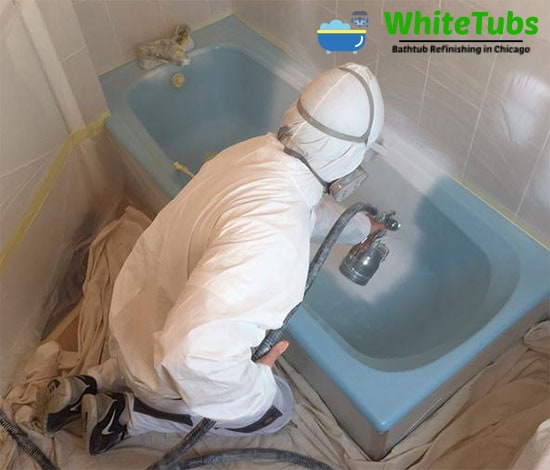
Spray-on bathtub refinishing
Also called tub spraying or spray-on enamel: a prepared tub surface is coated with a two-component epoxy enamel from a sprayer — or a roller and brush in DIY kits. The goal is a glossy, uniform refresh at a low price, usually when the tub is solid but the surface looks worn.
When it can make sense:
- The tub is solid and stable — no flexing, movement, or soft spots
- Damage is surface-level — dullness, stains, light scratches
- You need the lowest-cost option and accept a shorter lifespan
- You can live with heavy ventilation needs and a longer cure
Deep chips, rust-through, movement, or cracking — spraying won’t be the answer.
Why people choose spray-on
Lower upfront cost
Cheaper than replacement — and often cheaper than a proper pour-on job.
Good first impression
Fresh shine and a whiter look the day it’s done.
DIY kits exist
Materials are easy to find at any hardware store.
Delays replacement
Buys time — if expectations are realistic.
Why spray-on often disappoints
In real bathrooms — especially high-use rentals — sprayed finishes fail faster than people expect.
Shorter lifespan
A thin sprayed layer is a temporary improvement. Cleaning, moisture, and daily use wear it down sooner than thicker systems.
Strong odor, hard to ventilate
Intense fumes during application and curing. In apartments and older buildings, ventilation limits become a real problem.
Longer downtime
Many spray systems need more drying and curing time — the bathroom stays out of use longer.
Visible texture and defects
- Streaks and roller marks
- Bumps and orange peel
- Dust trapped in the finish
- Uneven gloss and reflections
Doesn’t fix structural problems
If the tub flexes or has installation issues, a sprayed coat won’t stop the movement — it cracks and peels instead.
Overspray everywhere
Mist lands on tile, fixtures, mirrors, and floor — the whole bathroom has to be masked in plastic.
Spraying it yourself — what actually matters
DIY spraying can work for a basic cosmetic refresh. Almost every failure comes from preparation.
- Remove or properly cover the drain, overflow, and hardware
- Clean off soap scum, oils, mineral buildup, and old coatings
- Sand evenly for consistent adhesion
- Degrease thoroughly and let the surface dry completely
- Mix components precisely — wrong ratios mean a weak finish
Important: most coatings have a limited working time after mixing. If you rush or miss spots, the finish shows it.
A better result
Spray-on vs pour-on
Spraying is popular because it’s quick. If the goal is a smoother, more durable, looks-new finish, a pour-on, self-leveling system is the better choice.
- Thicker, more uniform coating
- No brush or roller marks
- No overspray across the bathroom
- Ready to use in about 24 hours
- Better long-term durability with proper prep and care
Pour-on, self-leveling coating in action
Deciding between methods?
Send a photo — we’ll recommend based on your tub type, condition, and building constraints.
Frequently asked questions
Is spray-on refinishing the same as “painting a tub”?
Not exactly. Spray-on refinishing uses coatings designed for bathroom surfaces, but the result still depends heavily on prep and curing. Done poorly, it behaves like paint—peeling, chipping, and dulling quickly.
Will a spray-on tub look like new?
It can look very good at first—especially on tubs with light wear. But deep defects, uneven prep, or moisture issues can show through.
How long does spray-on refinishing last?
It varies widely based on prep quality, materials, and cleaning habits. If you want maximum lifespan, ask about thicker, self-leveling pour-on systems.
What’s the biggest reason spray-on fails?
Poor surface preparation (or coating over old failing layers). Adhesion is everything.